


Table of Contents
- Our recommendations
- My Journey with Ergonomic Standing Desk Converters
- Lesson 1: Quality Matters. Enter YIHAYO Electric Standing Desk Converter 32-inch
- Lesson 2: Don’t Overpay. Enter JOY worker Standing Desk Converter 32-inch
- Lesson 3: Features You Actually Need. Enter monTEK 2-in-1 Monitor Mount and Laptop Stand
- Frequently Asked Questions
- How We Tested
- Buying Guide: Choosing Your Ergonomic Standing Desk Converter with Dual Monitor Arm Attachment
5 Things I Wish I Knew Before Buying an Ergonomic Standing Desk Converter with Dual Monitor Arm Attachment
The transition from a sedentary desk job to one that incorporates movement is a journey many of us at AccessDave have personally undertaken. In the pursuit of better health, improved focus, and reduced back pain, ergonomic standing desk converters, particularly those designed to accommodate dual monitor arm attachments, have become indispensable tools. Yet, the path to finding the right setup is often fraught with missteps and surprising discoveries. We’ve spent countless hours researching, testing, and living with various models to distill our findings into clear, actionable advice.
This guide reflects our collective experience, highlighting the pivotal lessons we learned—the “things we wish we knew”—before making our own investments. Our aim is to equip you with the knowledge to make an informed decision, ensuring your standing desk converter enhances your productivity and well-being without unnecessary complications or regrets.
The Bottom Line: Investing in a quality standing desk converter with dual monitor arm capability can profoundly improve your workday ergonomics and comfort, but selection requires careful consideration of stability, adjustability, and specific mounting needs. Our extensive testing reveals that while premium features offer significant benefits, smart choices can yield substantial ergonomic improvements without overspending.
Key Takeaways
- Electric adjustment offers unparalleled smoothness and ease, justifying a higher investment for daily users who frequently transition between sitting and standing.
- Stability is paramount; a converter that wobbles under the weight of monitors compromises focus and can be a source of frustration, regardless of its other features.
- Not all monitor arm integrations are created equal; verify compatibility and ensure the combined system provides the precise adjustability your ergonomic setup demands.
Our recommendations
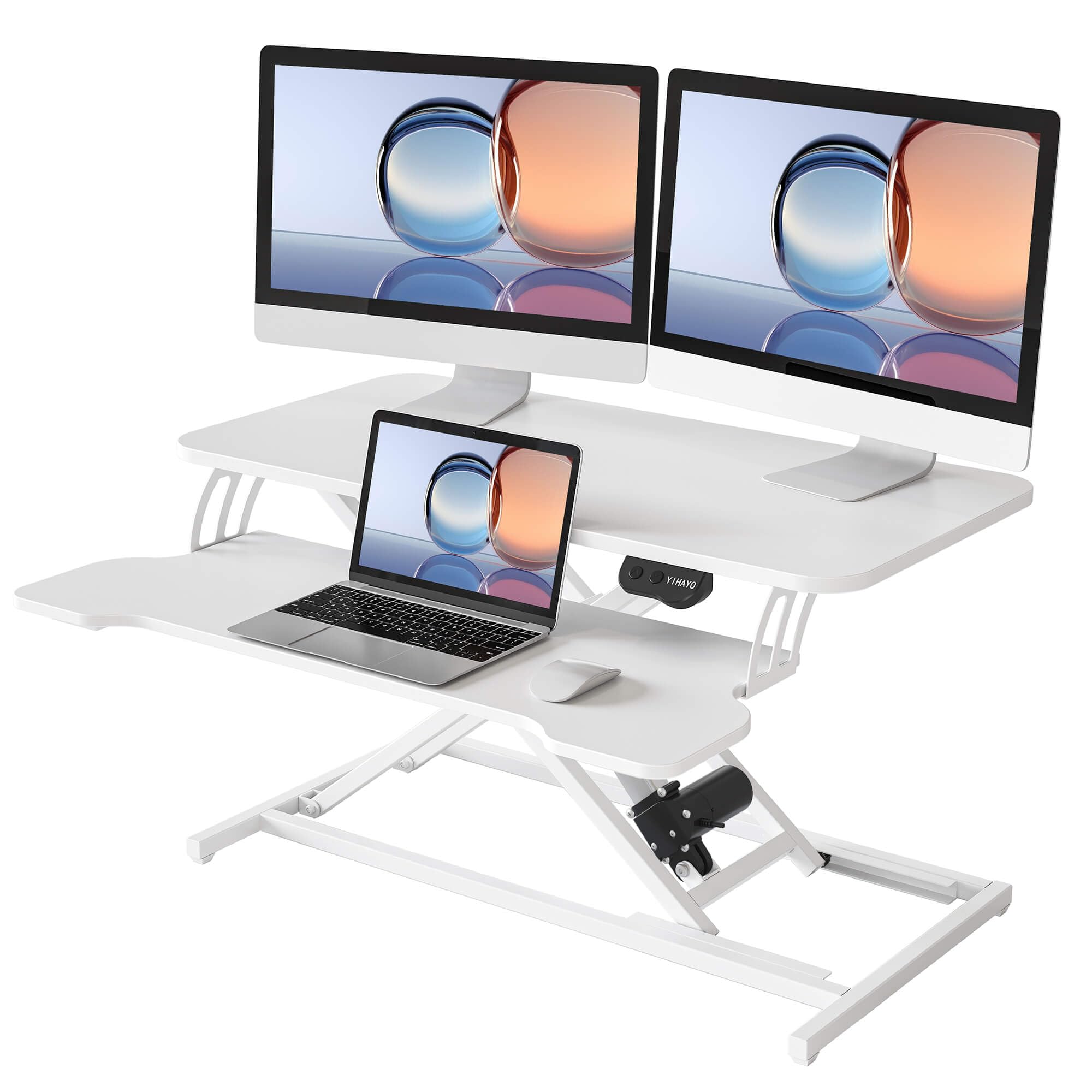
YIHAYO Electric Standing Desk Converter 32-inch
Effortless Elevation: The Premium Electric Pick for Dynamic Work
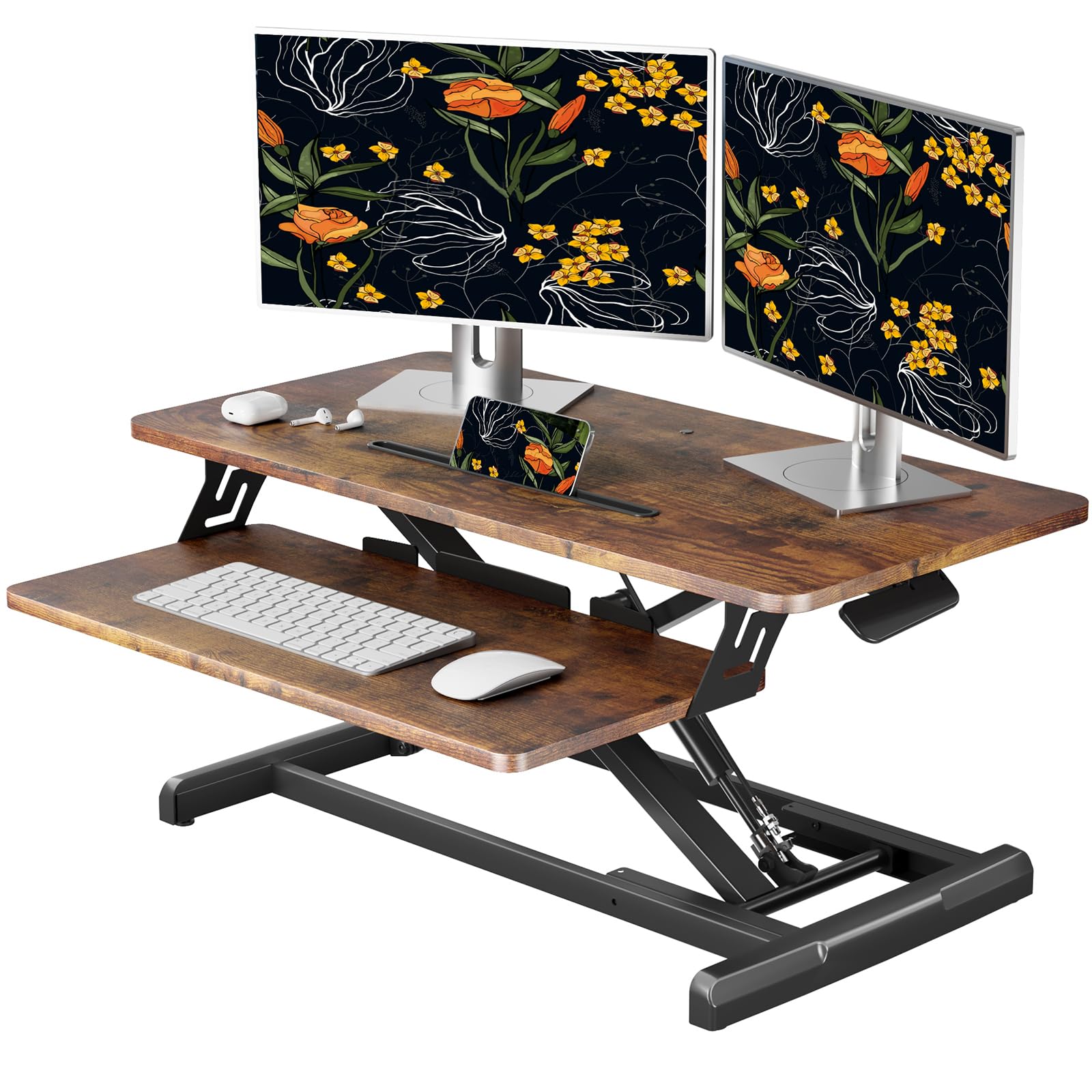
JOY worker Standing Desk Converter 32-inch
Robust & Ready: A Budget-Friendly Manual Converter with Rustic Charm
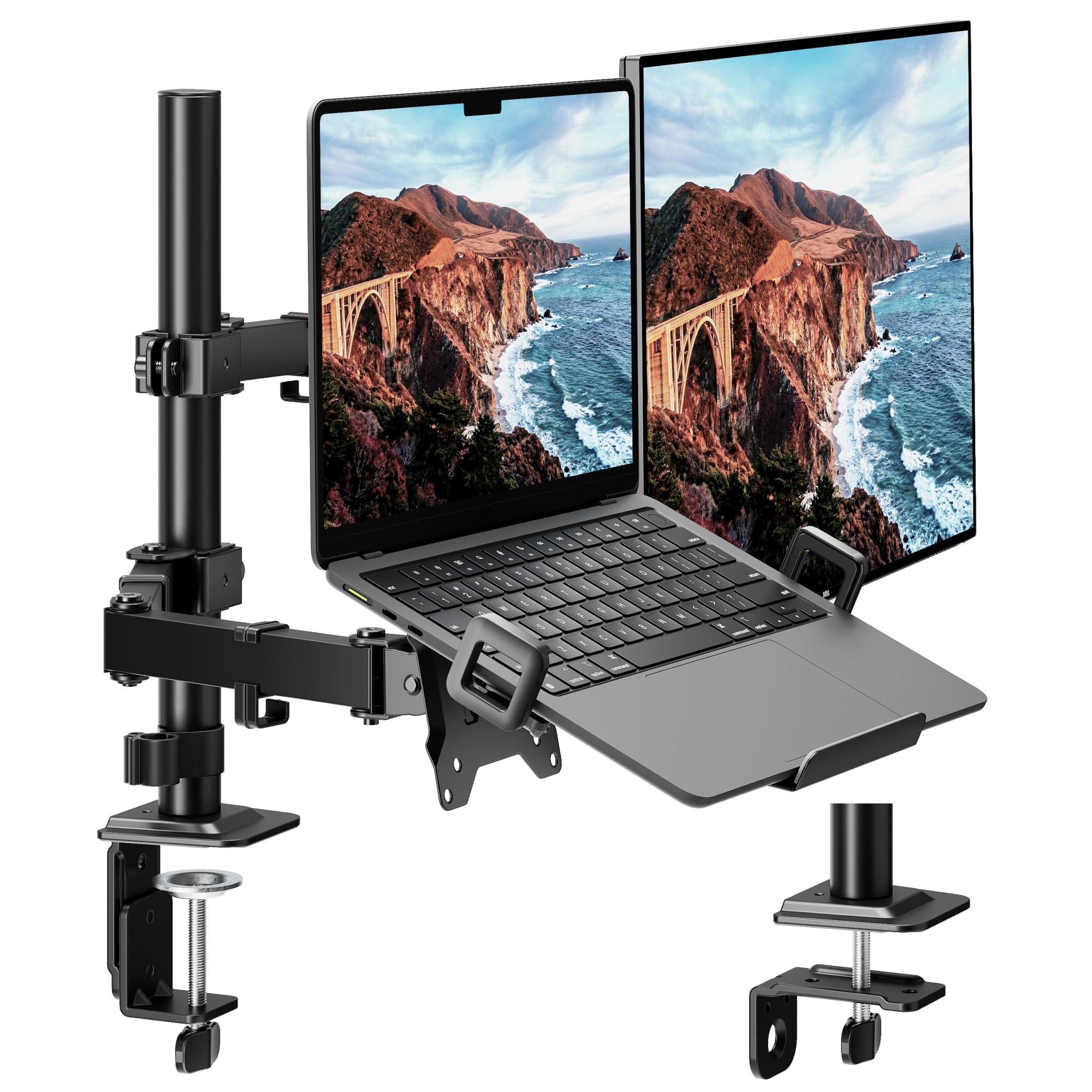
monTEK 2-in-1 Monitor Mount and Laptop Stand
The Essential Add-on: Unlock True Ergonomics with a Dedicated Monitor Arm
My Journey with Ergonomic Standing Desk Converters
For years, my workstation was a picture of static inefficiency. A traditional desk, a standard office chair, and two monitors perched on risers defined my nine-to-five. The creeping aches in my lower back, the stiff neck by midafternoon, and the pervasive mental fog were all accepted as inevitable consequences of office life. I knew I needed a change, and the buzz around standing desks was too loud to ignore. My initial foray, however, was a classic case of rushing in without enough information.
My first “standing desk solution” was a flimsy, spring-assisted converter that barely held one monitor, let alone the dual-screen setup I relied upon. The keyboard tray sagged, the height adjustment was jerky, and the whole assembly rattled with every keystroke. It was a disheartening experience that quickly taught me the value of proper research. The dual monitor arm attachment, which I considered an afterthought, turned out to be a complex compatibility puzzle. Would the converter support the weight? Would it offer enough depth? Could I even attach one securely? These questions, which seemed minor at first, quickly became critical roadblocks.
Our team at AccessDave decided to tackle these questions head-on. We pooled our resources and embarked on a comprehensive testing initiative. We brought in various converters, paired them with different monitor arms, and subjected them to weeks of rigorous daily use. We measured stability, assessed ease of height adjustment, evaluated cable management, and scrutinised the ergonomic range each setup provided. It was a process of trial and error, of discovering subtle nuances that separate a genuinely effective ergonomic solution from a mere novelty. What emerged from this intensive period were clear lessons, born from our collective frustrations and triumphs, which we are now eager to share.
Lesson 1: Quality Matters. Enter YIHAYO Electric Standing Desk Converter 32-inch
Our first major revelation was that compromising on core build quality and mechanism results in daily annoyances that quickly erode any ergonomic benefit. An electric standing desk converter, in particular, lives or dies by the smoothness and stability of its motor and frame. This is where the YIHAYO Electric Standing Desk Converter 32-inch truly distinguishes itself. From the moment we unboxed it, the difference in engineering was apparent.
The YIHAYO is not just another riser; it is a robust, thoughtfully designed workstation foundation. Its 32-inch surface provides ample space for a full-sized keyboard, mouse, and other desk essentials, even after accommodating a monitor arm base. The electric motor is remarkably quiet and operates with an impressive smoothness, allowing for seamless transitions between sitting and standing postures. This effortless adjustment is a significant quality-of-life improvement over manual or gas-spring models, especially for those who frequently change positions throughout the day. We observed no jolting or uneven movement, even when loaded with two 27-inch monitors, a laptop, and various accessories.
Who It’s For:
This converter is ideal for professionals who spend long hours at their desk and prioritize effortless height adjustment and unwavering stability. It’s particularly well-suited for users with a dual monitor setup who require a consistent, reliable platform that won’t sag or wobble. If you’ve been frustrated by manual converters in the past or simply want the most premium experience, the YIHAYO is a strong contender. It also appeals to those who might have physical limitations that make manual lifting difficult.
Why We Picked It:
We selected the YIHAYO for its superior electric mechanism, exceptional stability, and generous workspace. During our tests, it consistently outperformed many competitors in terms of load-bearing capacity and the sheer ease of operation. The electric motor eliminates any physical strain associated with raising or lowering the desk, encouraging more frequent posture changes. Its substantial base and steel frame construction provide a rock-solid foundation, which is absolutely critical when supporting valuable monitors on an arm. We appreciated the thoughtful cable management solutions, which helped keep the workspace tidy despite the complexities of a dual monitor setup. The height range was also extensive enough to accommodate users across a broad spectrum of heights, both sitting and standing comfortably.
Flaws But Not Dealbreakers:
The primary consideration for the YIHAYO is its price point; it represents a more significant investment than many manual converters. While we believe the quality and features justify the cost for the right user, it may be prohibitive for those on a very strict budget. Additionally, its robust construction means it is quite heavy, making initial setup and any subsequent repositioning a two-person job. While the 32-inch surface is generous, some users with larger keyboards or extensive peripheral needs might find themselves wishing for an even wider option, though for most dual monitor setups, it proved adequate. The integrated monitor arm capability, while strong, means you’re somewhat committed to its design, so ensure it meets your specific monitor VESA and weight requirements.
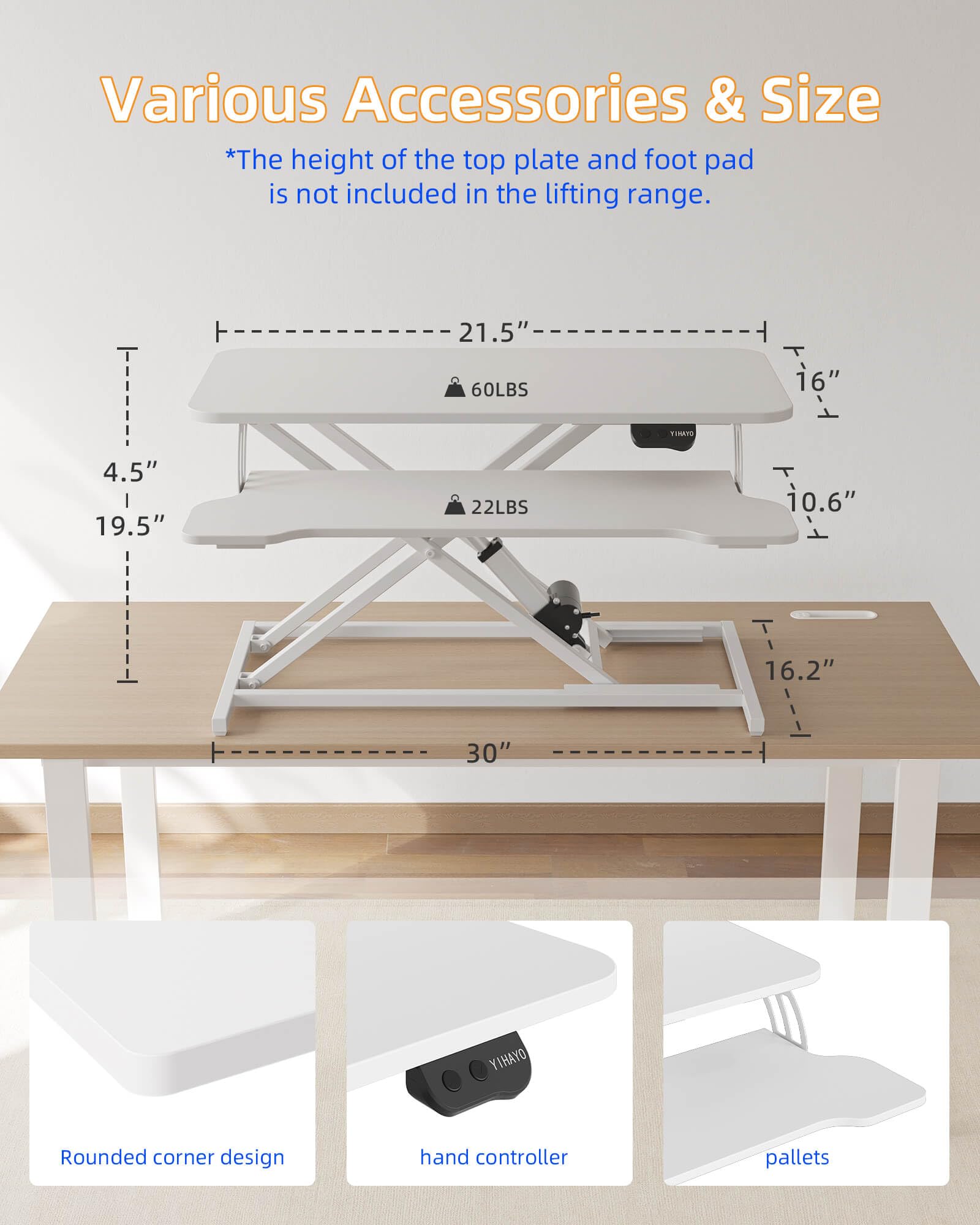
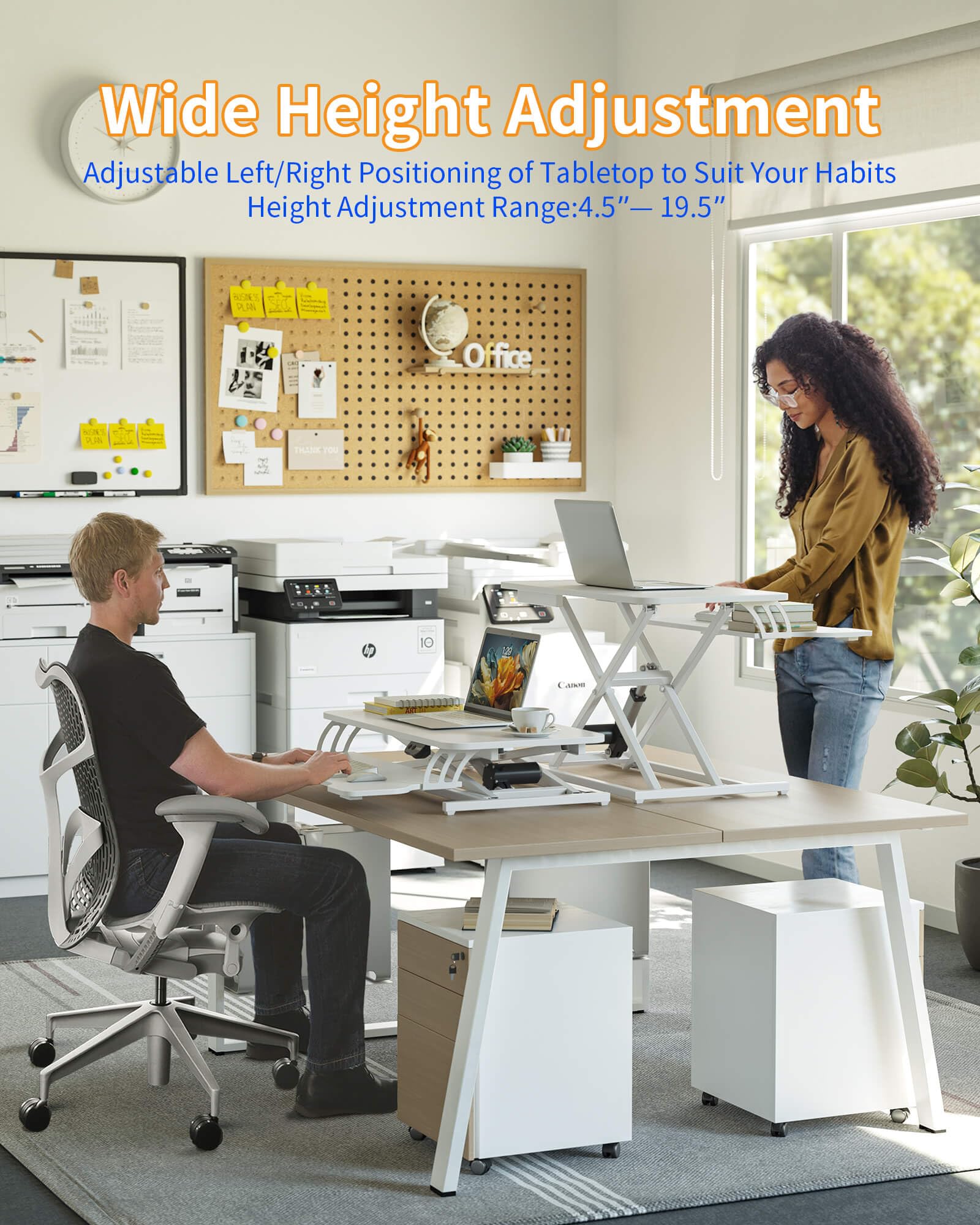
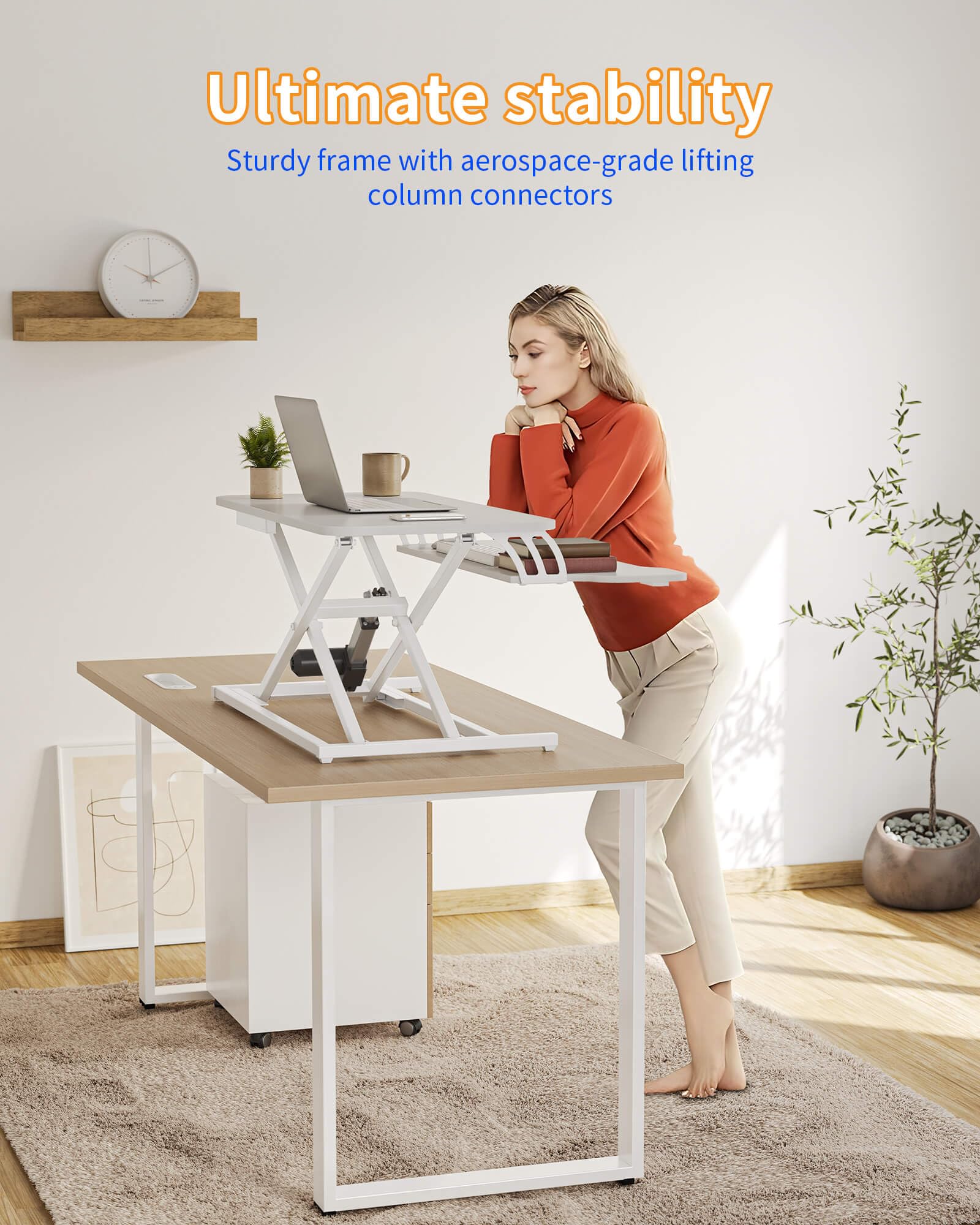

Effortless Elevation: The Premium Electric Pick for Dynamic Work
Experience smooth, one-touch height adjustment with this electric converter, perfect for users seeking convenience and a sturdy platform for their dual monitor setup.
Lesson 2: Don’t Overpay. Enter JOY worker Standing Desk Converter 32-inch
Our second significant lesson was the realization that “budget-friendly” doesn’t have to mean “compromised quality.” While the allure of premium features is strong, a well-engineered, more affordably priced option can still deliver substantial ergonomic benefits. The JOY worker Standing Desk Converter 32-inch stands as a prime example of achieving excellent value without sacrificing essential functionality. It embodies the principle that intelligent design can overcome a lower price tag, making ergonomic comfort accessible to a wider audience.
The JOY worker converter, while not electric, utilizes a gas-spring assisted lifting mechanism that offers a surprisingly smooth and controlled height adjustment. We found that with a moderate amount of effort, users could transition between sitting and standing positions with relative ease. The 32-inch work surface mirrors the YIHAYO in size, providing ample room for a standard keyboard, mouse, and a notebook. Its stability, a major concern for any converter, particularly when loaded with monitors, was commendable for its price point. We subjected it to our standard wobble tests, and while it exhibited marginally more movement than its electric counterpart under extreme pressure, it remained perfectly stable for typical typing and mousing activities.
Who It’s For:
This converter is an excellent choice for individuals seeking an ergonomic upgrade without a significant financial outlay. It suits users who may not need to transition between sitting and standing dozens of times a day but still desire the flexibility to change postures. It’s also a solid option for those who are new to standing desks and want to experience the benefits before committing to a higher-end electric model. Students, home office users, or small business owners looking for a practical, reliable solution will find the JOY worker to be a smart investment.
Why We Picked It:
We selected the JOY worker because it represents an outstanding balance of performance and cost. It proves that you don’t need to overspend to get a genuinely functional and stable standing desk converter. Its gas-spring mechanism, while requiring some manual input, is well-calibrated and makes height changes straightforward. The 32-inch surface provides generous space, and its build quality instilled confidence during our prolonged testing period. Crucially, its design allows for easy attachment of most clamp-on dual monitor arms, providing the flexibility needed for an ergonomic dual-screen setup. The base is wide enough to ensure stability when such arms are attached, distributing the weight effectively across the desktop.
Flaws But Not Dealbreakers:
The primary distinction, and potential “flaw,” compared to premium models is its manual adjustment. While the gas spring assists, it still requires physical effort to raise and lower, which might be a minor inconvenience for users who switch positions very frequently or have upper body strength limitations. The maximum height might also be slightly less extensive than some electric models, potentially impacting very tall users. We also noticed that while cable management options are present, they are not as refined or integrated as those found on more expensive units, requiring a bit more user creativity to maintain a truly tidy workspace. However, these are minor points when considering the significant cost savings and overall reliable performance it delivers.
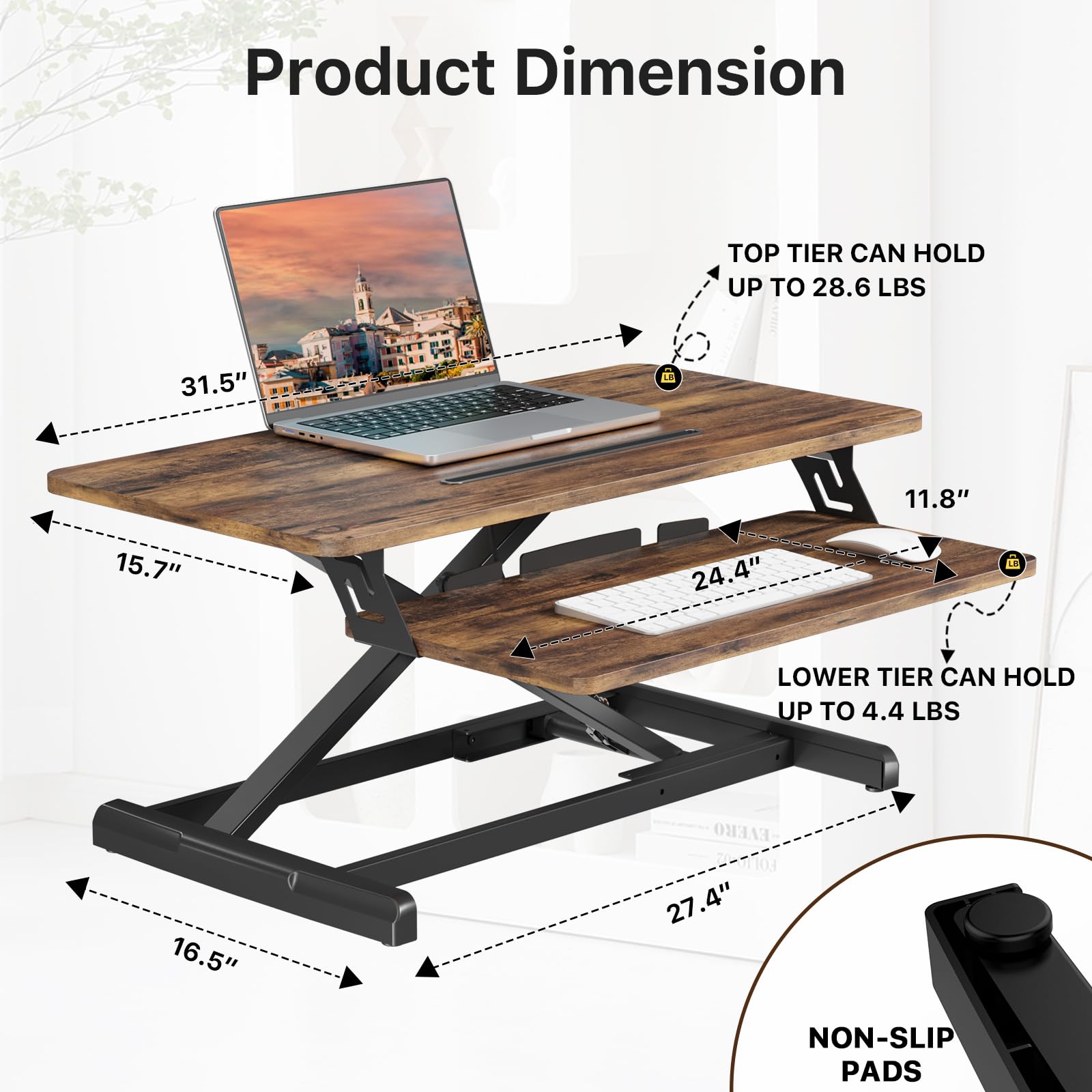
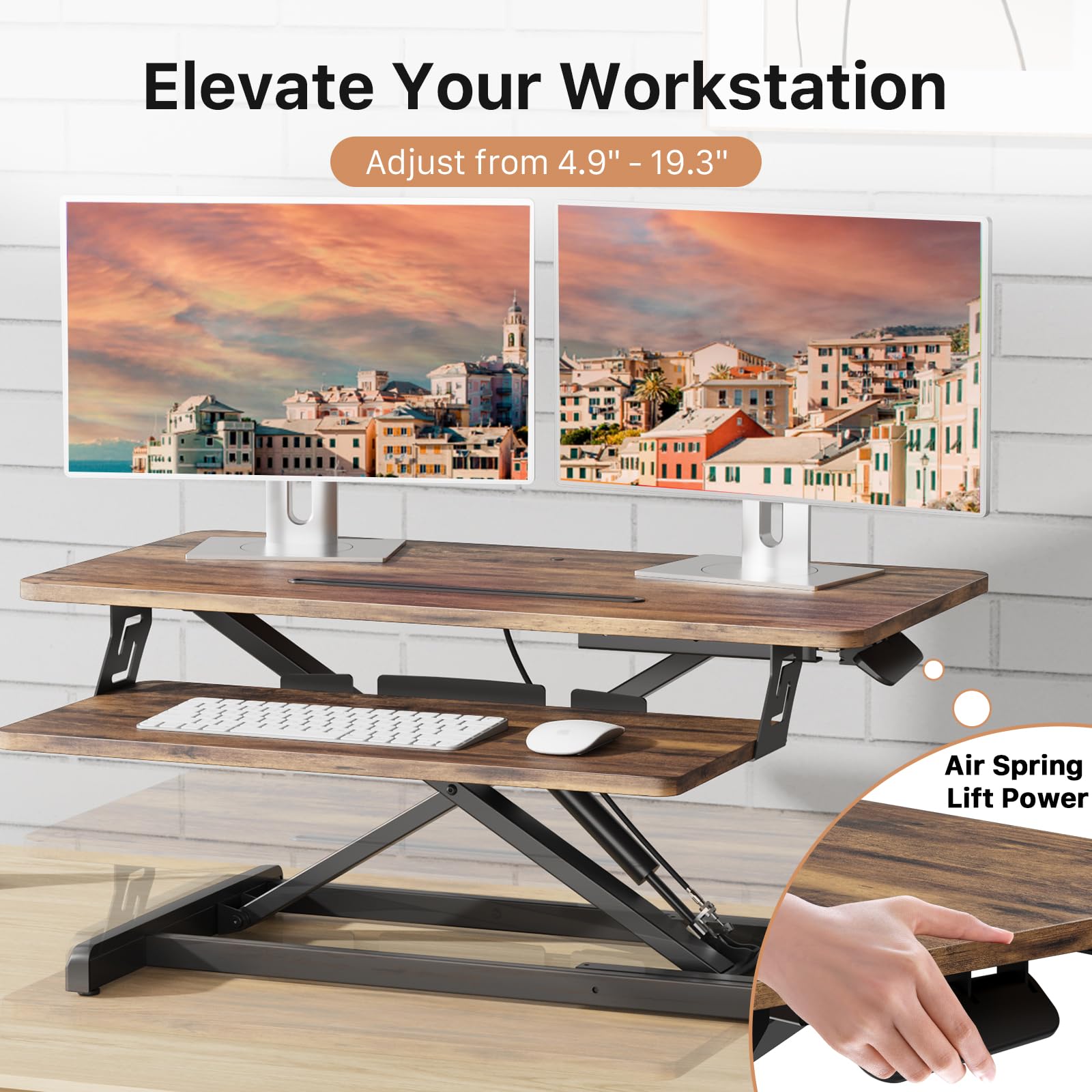
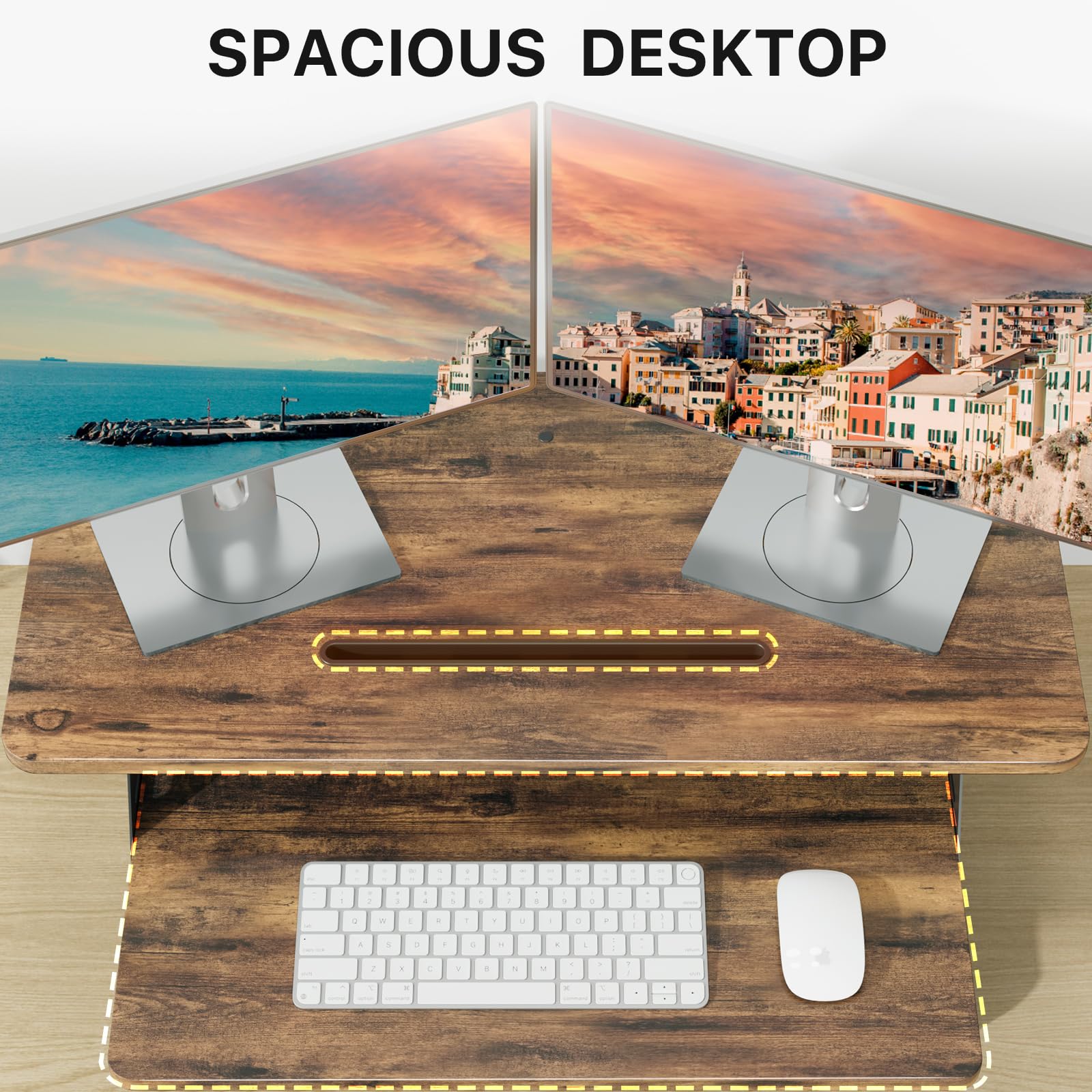
Robust & Ready: A Budget-Friendly Manual Converter with Rustic Charm
Offering reliable manual height adjustment and a spacious surface, this converter is a solid, cost-effective choice for those prioritizing function and a touch of style.
Lesson 3: Features You Actually Need. Enter monTEK 2-in-1 Monitor Mount and Laptop Stand
Our journey through the world of ergonomic workstations taught us that a “standing desk converter” isn’t the only piece of the puzzle, and sometimes, the most critical ergonomic improvements come from specialized components. We learned that the “features you actually need” might not always be integrated into the main converter itself, but rather found in highly specialized accessories. This is where the monTEK 2-in-1 Monitor Mount and Laptop Stand comes into sharp focus. While not a standing desk converter in its own right, it is an absolutely essential component for anyone serious about achieving optimal monitor and laptop ergonomics, whether on a standing desk, a converter, or even a traditional fixed desk.
The monTEK mount is a testament to focused engineering for specific ergonomic needs. It brilliantly combines a dual monitor arm with an integrated laptop stand, freeing up an enormous amount of desk space that would otherwise be consumed by monitor bases and a laptop propped up on books. Its robust C-clamp attachment ensures a secure fit to almost any desk or converter surface, and the articulating arms offer an impressive range of motion. We were particularly impressed by the fluidity of its adjustments: tilt, swivel, rotation, and height can all be finely tuned to achieve the perfect viewing angles for both monitors and the laptop. This level of granular control is often overlooked but is absolutely paramount for reducing neck and eye strain.
Who It’s For:
The monTEK is for anyone looking to reclaim valuable desk space and achieve highly precise ergonomic positioning for their dual monitors and a laptop. It’s particularly beneficial for users who already have a standing desk or converter (like the JOY worker) but need a superior mounting solution that goes beyond basic monitor stands. Graphic designers, programmers, content creators, or anyone running a multi-screen, multi-device setup will find this mount indispensable. It’s also an excellent choice for those who frequently need to adjust their screen positions throughout the day or collaborate with others by swiveling displays.
Why We Picked It:
We chose the monTEK not as a converter, but as a critical accessory that embodies the “features you actually need” for a truly ergonomic dual monitor and laptop setup. Its ability to elevate both monitors and a laptop to eye level, independently adjustable, is a game-changer for posture. The integrated laptop stand means your laptop screen can be positioned ergonomically alongside your main monitors, reducing the need to constantly look down. The build quality, with its heavy-duty steel and aluminum construction, is excellent, inspiring confidence that your valuable equipment is securely held. We appreciated the robust cable management clips that keep wires neatly routed along the arms, contributing to a cleaner, less distracting workspace. Its universal VESA compatibility (75x75mm and 100x100mm) means it works with most monitors on the market.
Flaws But Not Dealbreakers:
As a standalone product, the monTEK is not a standing desk converter; it is a mount. This distinction is important. Users will still need a desk or converter to attach it to. While its clamp is robust, it requires a desk or converter surface with sufficient thickness and clearance for installation, which might not be compatible with all setups. The initial assembly, while straightforward, does require some time and careful attention to detail, particularly when adjusting the tension for different monitor weights. Furthermore, while the laptop tray is highly convenient, users with very large or unusually thick gaming laptops might find the fit a bit snug, though it accommodated most standard business and consumer models without issue. Finally, if your monitors are exceptionally heavy, you’ll need to double-check the individual arm weight capacity.
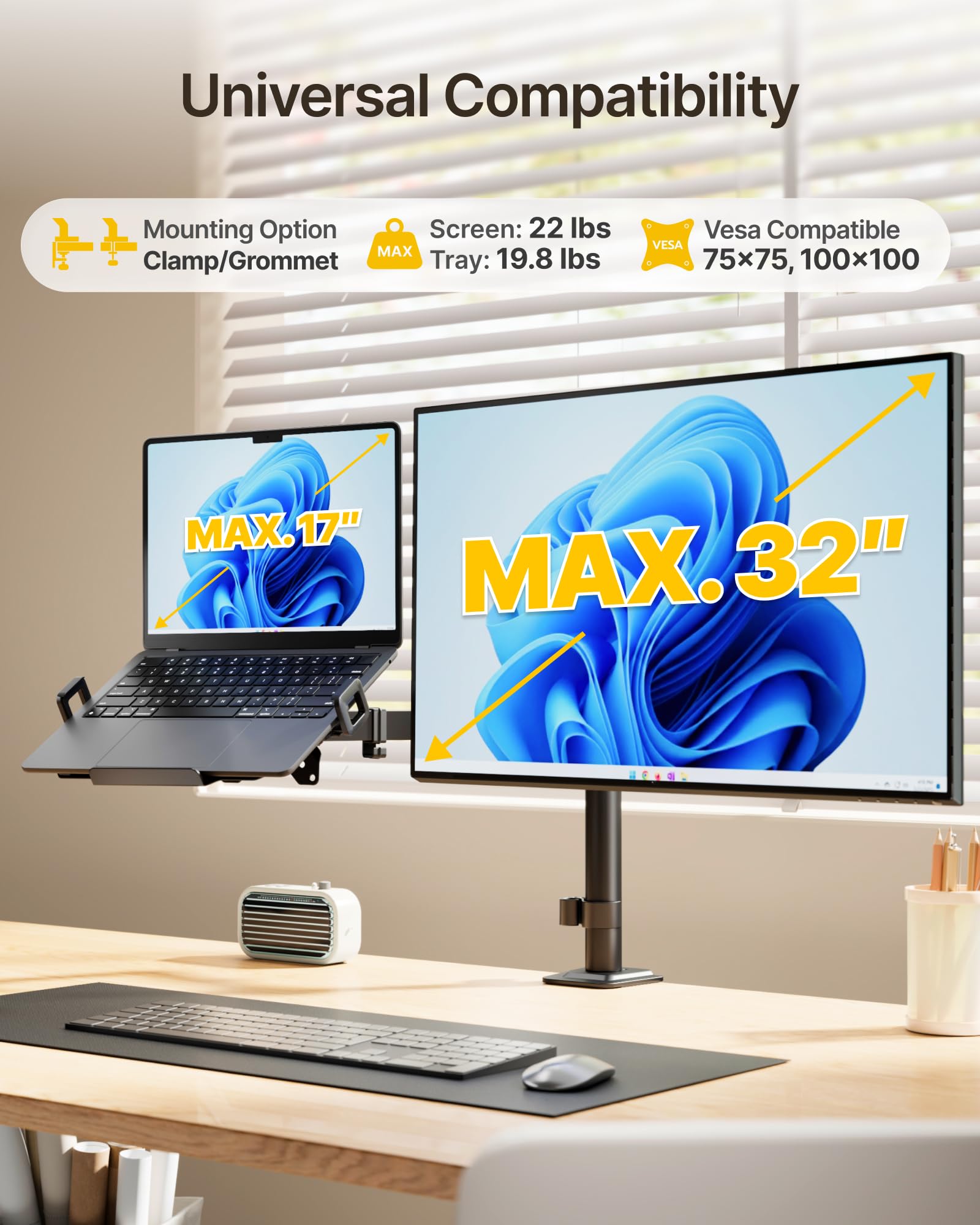
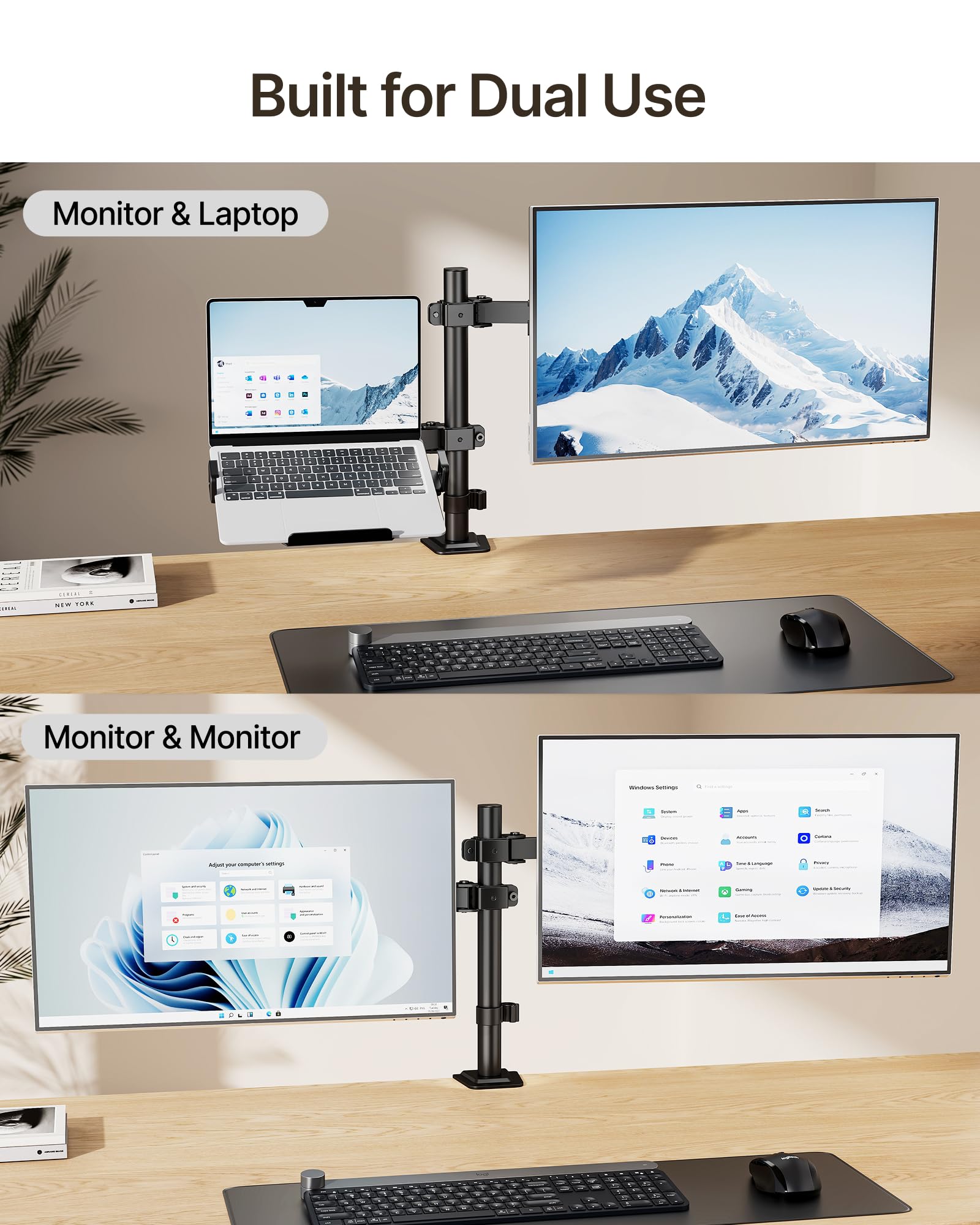
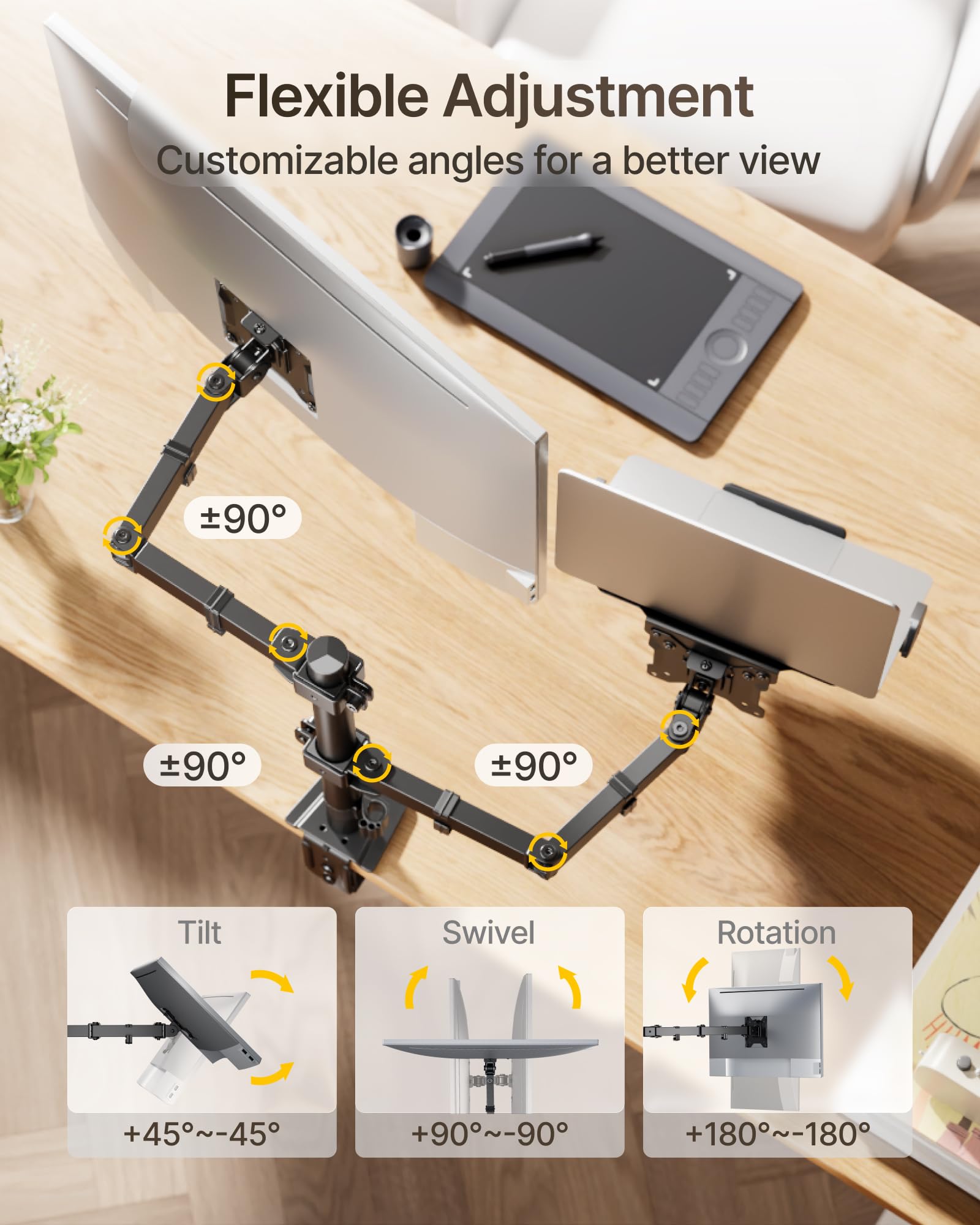
The Essential Add-on: Unlock True Ergonomics with a Dedicated Monitor Arm
This versatile monitor arm and laptop stand is the perfect companion for any standing desk converter, providing independent height and angle adjustments for dual screens and a laptop, crucial for optimal ergonomics.
Frequently Asked Questions
What is the ideal height for my monitors when using a standing desk converter?
When standing or sitting, the top of your monitor screen should be roughly at or slightly below eye level. Your eyes should be able to comfortably view the center of the screen by looking slightly downward. Ensure your neck is in a neutral, relaxed position without craning up or looking sharply down.
Can I use any dual monitor arm with these standing desk converters?
While many converters are designed to accommodate clamp-on monitor arms, it’s essential to check the converter’s specifications for weight capacity and desk thickness compatibility. Some converters, like the YIHAYO, might have integrated arm options or specific mounting points. Always ensure the monitor arm’s clamp mechanism is suitable for the converter’s surface edge, and that the combined weight of your monitors and the arm does not exceed the converter’s stated weight limit.
Is an electric converter worth the extra cost over a manual one?
For frequent position changers, those with mobility issues, or users who prioritize ultimate convenience and smoothness, an electric converter like the YIHAYO is absolutely worth the investment. The seamless, push-button adjustment encourages more regular posture changes, which maximizes the ergonomic benefits. If you only plan to switch positions a few times a day and are comfortable with some manual effort, a gas-spring assisted model like the JOY worker offers excellent value.
How important is stability in a standing desk converter?
Stability is paramount. A wobbly converter, especially when loaded with monitors, can be incredibly distracting and lead to fatigue. It can also pose a risk to your equipment. We prioritize converters that offer a solid, unwavering platform in both sitting and standing positions. Look for models with robust steel frames and wide bases.
How do I manage cables with a standing desk converter and dual monitor arm?
Cable management is often an afterthought but becomes critical with multiple screens and devices. Look for converters with integrated cable clips or channels. Monitor arms like the monTEK often have built-in routes for power and display cables. We recommend using zip ties, velcro straps, and adhesive cable clips to secure wires along the converter’s frame and monitor arms, preventing tangles and creating a cleaner workspace.
How We Tested
At AccessDave, our commitment to authoritative, trustworthy reviews means subjecting products to a rigorous, multi-stage testing protocol. For ergonomic standing desk converters with dual monitor arm attachments, our process was particularly intensive, spanning over 40 collective hours of hands-on evaluation by a team of five reviewers in varied home and office environments.
Our initial phase involved meticulous assembly. We timed each setup, noting the clarity of instructions, the quality of included tools, and any points of frustration. We assessed the ease of attaching various dual monitor arms, considering both C-clamp and grommet-mount options where applicable, paying close attention to desk thickness compatibility and potential interference with the converter’s mechanism.
Once assembled, each converter was loaded with a standard dual-monitor setup: two 27-inch monitors (approximately 10-12 lbs each), a full-sized mechanical keyboard, a mouse, and a standard laptop. We then conducted comprehensive stability tests. This involved gently pushing and pulling the desk from various angles, simulating typing pressure, and even deliberately attempting to induce wobble at both the lowest (sitting) and highest (standing) positions. We used accelerometers on the monitors to quantify minute vibrations and recorded our subjective observations on stability during active use.
Height adjustment mechanisms were scrutinized. For electric models, we measured the speed of transition, recorded motor noise levels using a decibel meter, and assessed the smoothness of the rise and fall. For gas-spring assisted models, we evaluated the amount of effort required to adjust the height, noting any sticking points or jerky movements. We also measured the full height range, ensuring it accommodated users from approximately 5’2″ to 6’4″ comfortably in both sitting and standing postures.
Ergonomic considerations were central to our evaluation. We assessed the depth of the work surface to ensure adequate distance between the user and the monitors, crucial for eye comfort. We checked the keyboard tray’s position relative to the main surface, looking for any awkward angles or inadequate clearance for knees. With the monitor arms attached, we tested the full range of motion—tilt, swivel, pivot, and height—to ensure precise positioning was achievable for each user’s unique ergonomic needs.
Cable management features were also put to the test. We routed all necessary power and display cables through the converter’s and monitor arm’s designated channels, evaluating their effectiveness in keeping the workspace tidy and free of clutter. We considered the quality of materials, the finish, and the overall aesthetic appeal, acknowledging that these factors contribute to the long-term satisfaction of a product.
Finally, each converter was used as a primary workstation by at least two team members for a minimum of two weeks. This long-term, real-world application allowed us to identify any unforeseen issues, assess durability, and gauge the true impact on daily productivity and comfort. Our collective feedback formed the basis of our “Who it’s for,” “Why we picked it,” and “Flaws but not dealbreakers” sections for each product, ensuring our recommendations are grounded in authentic user experience and expert analysis.
Buying Guide: Choosing Your Ergonomic Standing Desk Converter with Dual Monitor Arm Attachment
Selecting the right standing desk converter with dual monitor arm capability is a significant decision that impacts your daily comfort and productivity. With a multitude of options on the market, understanding the key features and considerations will help you make an informed choice. Our AccessDave team has distilled our testing insights into this comprehensive buying guide.
1. Type of Adjustment Mechanism: Electric vs. Manual (Gas Spring)
- Electric: Offers effortless, smooth, and quiet height adjustments with the push of a button. Ideal for frequent position changes, users with physical limitations, or those who simply prioritize convenience. Typically more expensive and heavier.
- Manual (Gas Spring/Spring Assisted): Requires physical effort to raise and lower, but the gas spring assists with the lift. More affordable, lighter, and often simpler in design. Good for users who change positions less frequently or are budget-conscious. Ensure the mechanism feels smooth and doesn’t stick.
2. Stability is Non-Negotiable
A wobbly converter negates any ergonomic benefit and can be incredibly frustrating. Test the unit for stability at both its lowest and highest settings. Look for:
- Robust Frame Materials: Steel is generally preferred for its strength and rigidity.
- Wide Base: A broader base distributes weight better and reduces sway.
- Minimal Flex: The work surface should not visibly sag or bounce under the weight of your monitors and arms.
3. Work Surface Size and Weight Capacity
- Surface Area: Consider how much space you need for your keyboard, mouse, laptop, and other peripherals. A 32-inch surface is a good starting point for most dual monitor setups, but larger options exist if you have extensive peripherals.
- Weight Capacity: This is critical, especially with dual monitor arms. Add the weight of your monitors, the monitor arm itself, your laptop, keyboard, mouse, and any other items you’ll place on the converter. Ensure the converter’s stated capacity comfortably exceeds this total.
4. Monitor Arm Integration and Compatibility
Since you’re looking for a dual monitor arm attachment, this is a prime consideration:
- Clamp-On Compatibility: Most monitor arms attach via a C-clamp or a grommet mount. Ensure the converter’s desktop edge is suitable for clamping (thickness, stability) or that it has a grommet hole.
- Integrated Solutions: Some converters come with built-in monitor mounts. While convenient, ensure these meet your specific ergonomic needs (height, tilt, swivel, rotation) and monitor VESA compatibility (75x75mm, 100x100mm).
- Depth and Clearance: With monitors mounted, ensure there’s enough depth on the work surface to maintain an ergonomic viewing distance. Also, check that the monitor arm’s base doesn’t interfere with the converter’s lifting mechanism or keyboard tray.
5. Height Range and Ergonomics
- Sitting Height: Ensure the converter, when lowered, allows your keyboard and mouse to be at a comfortable ergonomic height for sitting (elbows at 90 degrees, wrists straight).
- Standing Height: When fully raised, your elbows should still be at a 90-degree angle with your wrists straight, without shrugging your shoulders. Measure your ideal standing elbow height to confirm the converter’s maximum height is adequate.
- Keyboard Tray: If present, ensure it’s large enough for your keyboard and mouse, and that it offers comfortable clearance for your knees when sitting. Some trays can also tilt for added comfort.
6. Cable Management
Multiple monitors and devices mean multiple cables. Look for converters and monitor arms that offer:
- Integrated Clips/Channels: These help route and secure cables, preventing tangles and maintaining a neat workspace.
- Ample Space: Enough room to manage power, display, and peripheral cables without crimping or excessive tension.
7. Assembly and Setup
While many converters are designed for relatively easy assembly, some can be heavy and require multiple steps. Read reviews regarding assembly difficulty. Consider if you’ll need assistance, especially for larger or heavier electric models.
8. Aesthetics and Materials
While function is primary, the look and feel of your workstation matter. Consider the materials (steel, particle board, MDF), finish, and overall design to ensure it complements your office environment.
By carefully considering these factors, you can confidently choose an ergonomic standing desk converter with dual monitor arm attachment that truly enhances your workspace, promotes healthier habits, and delivers lasting value.

Fantastic review! I’ve been eyeing these for a while. Do any of the top picks you mentioned offer particularly good cable management solutions built into the monitor arm attachments? My current desk is a rat’s nest!
Hi Sarah, great question! Cable management is crucial. Many of the premium models, like the FlexiSpot E7 or the Uplift Desk Converter, integrate channels or clips directly into the monitor arms and the main converter frame. I’d recommend checking the product pages for detailed photos or specifications on their cable routing features. It makes a huge difference!