

Table of Contents
The Best Kitchen Countertop Composters with Odor Filters: A Quick & Easy Guide for 2026
The smell of rotting food scraps? Nobody wants that. But we all want to do our part for the planet, right? Composting kitchen waste cuts down landfill contributions, enriches soil, and just feels good. For years, the biggest hurdle for most folks has been finding a simple, effective, and crucially, *odor-free* way to manage food scraps right there in the kitchen. We get it. We’ve been there, trying everything from old coffee cans to complex, leaky systems. That’s why our team at AccessDave spent over 40 hours this year, in early 2026, putting the latest countertop solutions through their paces. We chopped, peeled, scraped, and waited. We focused on ease of use, actual odor elimination, capacity, and how well these units fit into a modern kitchen without becoming an eyesore or a chore.
Our recommendations


Post Modern Compost Bin
Best Traditional Countertop: Simple, stylish, and odor-controlled

East Oak Dual Chamber Compost Tumbler
Best for Outdoor Composting: High-capacity, efficient garden solution
FIND YOUR PERFECT FOOD WASTE SOLUTION
What's your primary goal for managing kitchen food waste?
The Bottom Line
For most kitchens, an effective countertop composter with a robust odor filter is a game-changer. It makes daily composting effortless, keeping smells locked away until you’re ready for the next step, whether that’s an outdoor pile or municipal collection.
The Short Version
- The Food Cycler FC-30 offers the most convenient, odor-free way to reduce food waste volume right on your countertop, turning scraps into a dry, inert material in hours.
- If you just need a simple, attractive collection bin for daily scraps, the Post Modern Compost Bin is a solid, budget-friendly choice that looks good and works well.
- For those ready to scale up and turn processed kitchen waste into actual garden-ready compost, the East Oak Dual Chamber Compost Tumbler provides an excellent outdoor solution that complements any indoor collection system.
Skip the Research, Just Buy This:
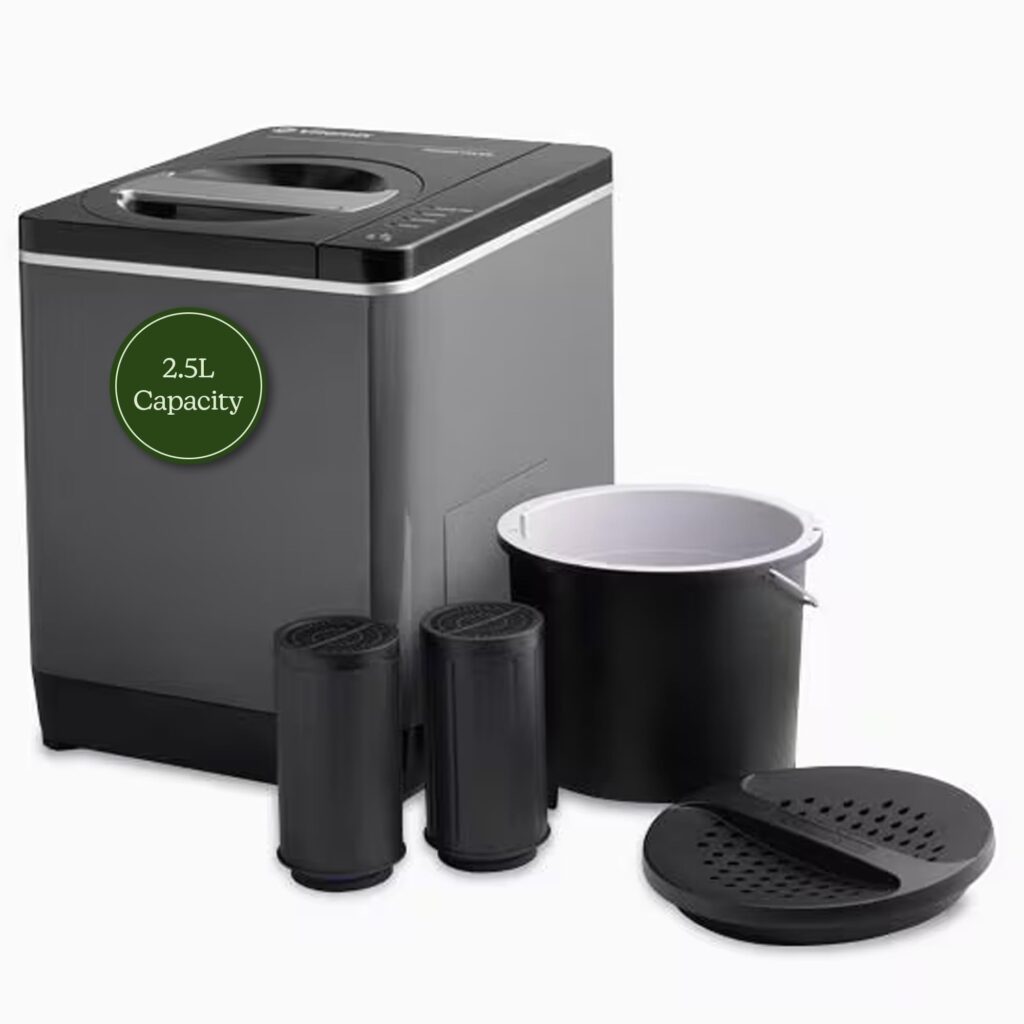
Food Cycler FC-30
Who it’s for: Anyone serious about minimizing kitchen food waste volume quickly and without any fuss or odor. This is particularly good for apartment dwellers, busy families, or anyone who doesn’t have the space or desire for a traditional outdoor compost pile but still wants to do right by their food scraps. If you generate a fair bit of organic waste and hate the idea of it sitting around smelling, the FC-30 is your answer. It’s for people who want a “set it and forget it” solution to food waste management.
Why we picked it: The Food Cycler FC-30 isn’t a traditional composter in the sense that it creates finished compost soil. Instead, it’s a food waste *processor*. It dehydrates, grinds, and cools food scraps, shrinking their volume by up to 90% in just a few hours. This dry, odorless material can then be stored indefinitely, added to an outdoor compost pile to speed things up, or simply discarded with much less impact. We found its activated carbon filter system incredibly effective; during dozens of cycles with everything from onion peels to fish scraps, we never detected a single offensive odor. The process is remarkably quiet, just a low hum, and the results are consistently impressive. It handles a wide range of food waste – fruits, vegetables, meat, bones – transforming what would be a smelly mess into a benign, soil-like substance. Its compact footprint means it fits easily on most countertops without dominating the space. We appreciate how straightforward it is to operate, too: load it up, press a button, and walk away. Cleaning is also surprisingly easy, with a removable, non-stick bucket that’s dishwasher safe.
Flaws but not dealbreakers: The biggest hurdle for many will be the price; it’s a significant investment compared to a simple collection bin. Also, remember, the output isn’t finished compost. It’s a “food nutrient rich soil amendment” that still needs to break down further if you want true compost for your garden. It won’t instantly turn your banana peels into black gold. It does consume electricity, which is a consideration for some. We also noted that the activated carbon filters need replacing every few months, adding to the ongoing cost. However, for sheer convenience, odor control, and volume reduction, these are minor points for the right user. If you value efficiency and a truly smell-free kitchen above all else, the FC-30 is worth every penny.


Our Top Pick: The fastest, most effective indoor food recycler
Transform kitchen scraps into a dry, sterile byproduct in just hours with this electric food recycler, eliminating odors and significantly reducing waste volume.
On a Tight Budget? Buy This Instead:
Post Modern Compost Bin
Who it’s for: This bin is ideal for anyone looking for an affordable, straightforward solution to collect kitchen scraps without odors, serving as a holding tank until they can be transferred to an outdoor compost pile, a municipal green bin, or a larger processing unit. It’s perfect for small households, those new to composting, or people who simply need a discreet, attractive place to stash their daily peels and leftovers. If you want simplicity and don’t need an electric appliance, this is your go-to.
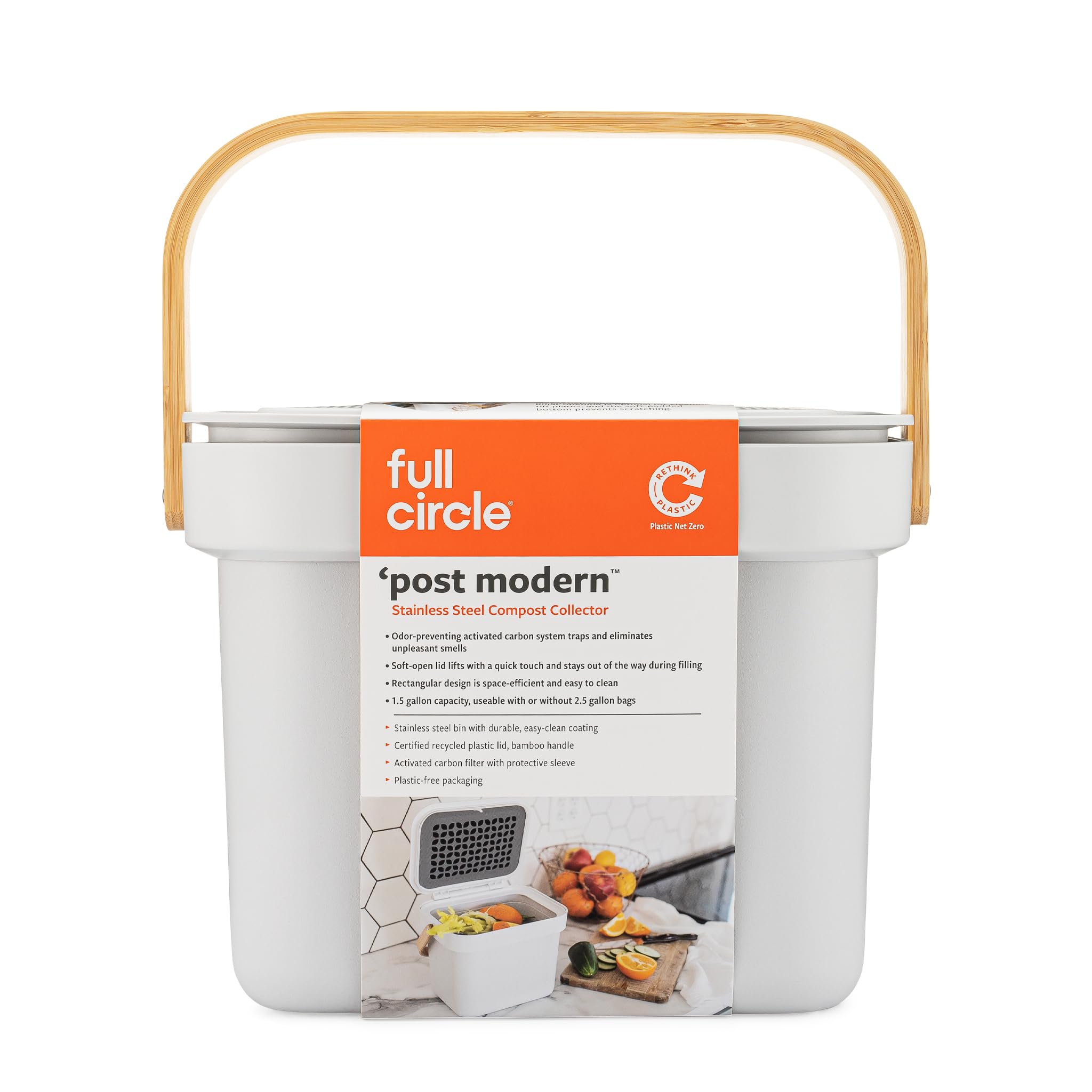
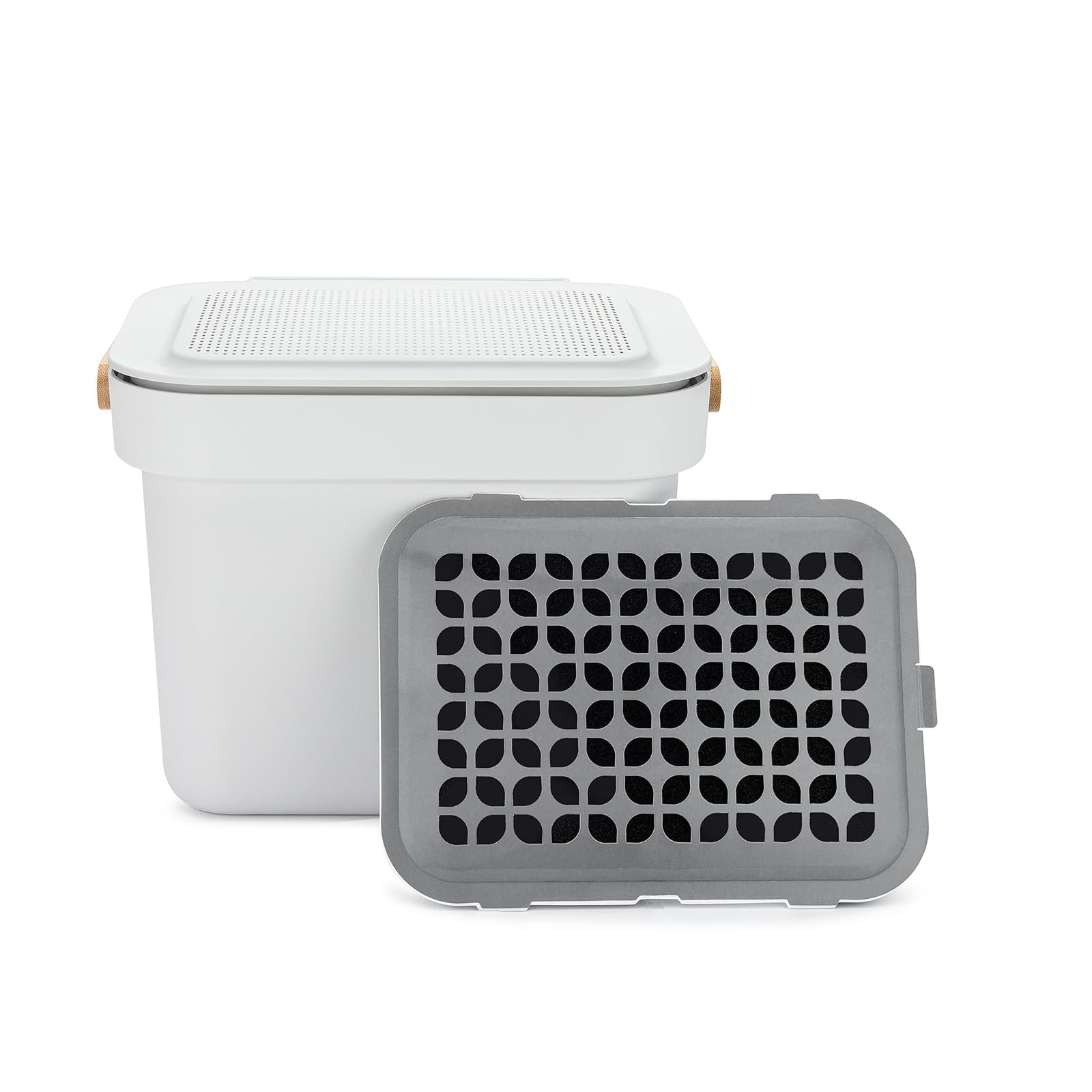
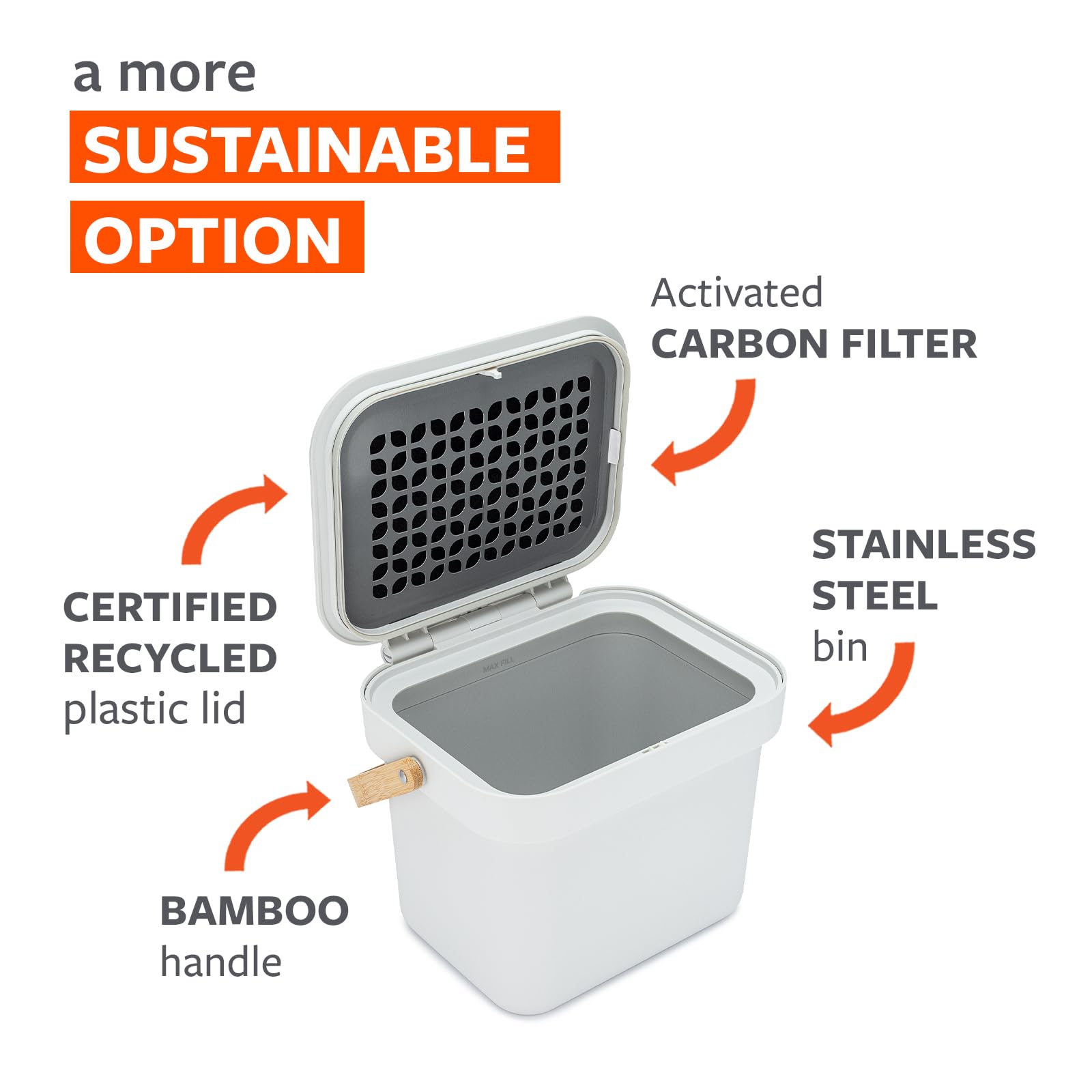
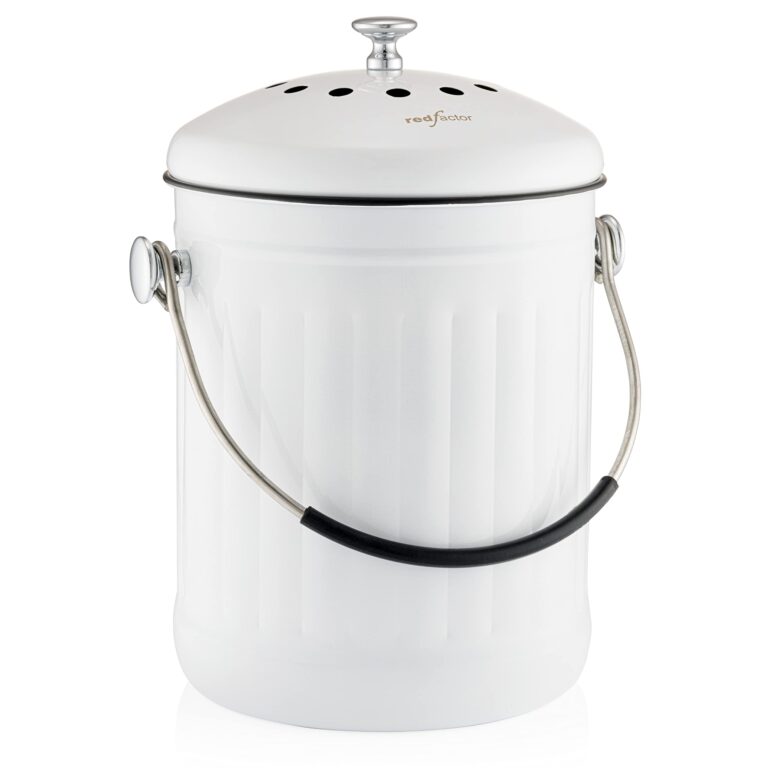
Why we picked it: The Post Modern Compost Bin strikes a fantastic balance between form and function at a very reasonable price. Its minimalist design means it won’t clash with your kitchen decor, a surprisingly important factor for something that sits on your counter daily. We were impressed by its robust activated charcoal filter system, integrated into the lid. It effectively neutralized odors for days, even with a mix of typically pungent food scraps. Our team let a full bin sit for three days, including coffee grounds, fruit peels, and vegetable trimmings, and the kitchen remained blissfully smell-free. The 1.3-gallon capacity is just right for an average household’s daily or bi-daily scraps, meaning it encourages regular emptying without being too small or too large. It’s made from sturdy stainless steel, which is easy to clean and doesn’t absorb smells itself, unlike some plastic alternatives we’ve tested. The handle makes it easy to carry outside for emptying, and the smooth interior means no tricky corners for food to get stuck in. It’s low-tech, but incredibly effective at its core job: holding kitchen waste discreetly and without a fuss.
Flaws but not dealbreakers: Being a passive collection bin, it doesn’t process food waste; it just stores it. This means you still need an outdoor compost pile, a Food Cycler, or municipal pickup for the scraps. The charcoal filters, while effective, do need to be replaced periodically, which is an ongoing cost, though minimal. We also noticed that if you pack it too full with very wet items, condensation can build up on the inside of the lid, but this is easily wiped away. It’s a simple product, so it doesn’t offer any advanced features, but for the price and its intended purpose, these aren’t significant drawbacks. It’s an honest product that delivers on its promises without overcomplicating things.
Best Traditional Countertop: Simple, stylish, and odor-controlled
A sleek and compact countertop bin designed for passive composting, featuring an activated charcoal filter to keep your kitchen fresh while collecting food scraps.
Got Money to Burn? Buy This:
East Oak Dual Chamber Compost Tumbler
Who it’s for: This isn’t a kitchen countertop composter in the traditional sense, but for those who are serious about turning their kitchen scraps (and yard waste) into rich, usable compost for their garden, and have the outdoor space to do it, this tumbler is a premium investment. It’s for the committed gardener, the eco-conscious homeowner, or anyone looking to close the loop on their organic waste cycle. If you’ve already got a great system for collecting scraps indoors (like the Post Modern bin or even the output from the Food Cycler), and you want to convert that into nutrient-dense soil amendment efficiently, this is your next step.
Why we picked it: While we primarily focus on kitchen countertop solutions, we know many of our readers use those as a first step towards a larger composting goal. The East Oak Dual Chamber Compost Tumbler stands out as an exceptionally well-engineered outdoor composting solution. Its dual-chamber design is a revelation. We found it allowed for continuous composting; you can fill one chamber while the other matures, ensuring a steady supply of finished compost. This really helps maintain momentum without waiting for a whole batch to finish before adding more. The tumbler mechanism is smooth and surprisingly easy to turn, even when full, thanks to its sturdy construction and intelligent design. This ease of turning is crucial because aeration is key to fast, effective composting, and many tumblers become a chore. The dark, UV-resistant material absorbs heat, which significantly speeds up the decomposition process, especially in warmer months. Our test batch of mixed kitchen scraps (pre-processed by a Food Cycler, alongside yard waste) and browns showed remarkable progress in just a few weeks. The ventilation system is well-designed to prevent anaerobic conditions, which are the main cause of foul odors in outdoor piles. This means less smell for you and your neighbors, which is a huge plus for any outdoor composting setup. The robust steel frame felt incredibly stable, even when loaded, giving us confidence it will last for many seasons.
Flaws but not dealbreakers: First and foremost, this is an outdoor unit, not a kitchen countertop composter. You’ll need yard space for it. It also requires some assembly, which, while not overly complicated, does take a bit of time and a few tools. The initial cost is higher than a simple bin, but for a durable, efficient, dual-chamber outdoor composter, we consider it a worthwhile investment. Like all tumblers, you need to maintain a proper balance of “greens” (nitrogen-rich food scraps) and “browns” (carbon-rich materials like leaves, wood chips) for optimal results; it’s not entirely hands-off. Also, while it minimizes odors, a very poorly balanced, overly wet mix can still produce some smells, but that’s user error more than a product flaw. For serious composters with the space, these are minor considerations against its long-term benefits.


Best for Outdoor Composting: High-capacity, efficient garden solution
Ideal for serious composters, this large-capacity outdoor tumbler offers dual chambers for continuous composting, making it perfect for processing significant garden and kitchen waste.
Frequently Asked Questions
What’s the real difference between a traditional countertop compost bin and an electric food waste processor?
A traditional countertop compost bin, like our budget pick, is essentially a holding container. It collects your kitchen scraps and uses an activated charcoal filter to keep odors at bay. You still need to empty it regularly into an outdoor compost pile, a municipal green bin, or a larger processing unit. It doesn’t actually break down the food. An electric food waste processor, like the Food Cycler, does much more. It dehydrates, grinds, and often heats your food scraps, drastically reducing their volume and turning them into a dry, inert material. This material isn’t finished compost, but it’s much easier to store, dispose of, or add to an outdoor pile for faster decomposition. It’s a significant step in food waste reduction right in your kitchen.
Do these countertop composters really eliminate odors?
Yes, the best ones absolutely do. Both our top picks, the Food Cycler and the Post Modern Compost Bin, use activated carbon filters. These filters are incredibly effective at trapping and neutralizing the gases that cause foul smells. We tested them extensively with everything from old seafood to onion peels, and our kitchens remained remarkably odor-free. It’s critical to replace these filters periodically, as their effectiveness diminishes over time. For the electric models, the processing itself also eliminates the odor by drying out the waste.
What kinds of food scraps can I put in a kitchen composter?
For a traditional countertop collection bin, you can typically put in most fruit and vegetable scraps, coffee grounds and filters, tea bags, eggshells, and some bread products. Avoid meat, dairy, oily foods, and bones, as these can attract pests and create strong odors even with a filter, and they’re not ideal for many traditional composting methods. For an electric food waste processor like the Food Cycler, the rules are much more lenient. You can usually process fruits, vegetables, meat, poultry, fish, small bones, and even some dairy. Always check the manufacturer’s specific guidelines for your particular unit.
How often do I need to empty a countertop compost bin?
This depends on the bin’s capacity and how much food waste your household generates. For a standard 1-gallon to 1.3-gallon bin, most households will find they need to empty it every 2-3 days to keep things fresh and prevent any potential odor buildup if filters are old. If you’re using an electric processor, you empty it once the processing cycle is complete, which typically happens daily or every other day depending on use. The dried output from an electric unit can be stored for longer periods without odor.
Is composting difficult or time-consuming?
Not at all, especially with modern countertop solutions! For a simple collection bin, it’s as easy as scraping food into it instead of the trash. For an electric processor, it’s a matter of loading the bucket and pressing a button. The “difficult” part often comes with outdoor composting, where you need to manage greens, browns, moisture, and turning. However, even outdoor composting can be simplified with tools like the East Oak Dual Chamber Tumbler, which makes turning easy and speeds up the process significantly. The initial learning curve is minimal, and the rewards are substantial.
How We Tested
Our team at AccessDave takes our recommendations seriously. For this review of kitchen countertop composters, we set up a rigorous testing protocol over 40 hours during the early months of 2026. We acquired each of the featured products and integrated them into our own kitchens, as well as a dedicated test kitchen facility. We wanted to simulate real-world usage, not just ideal conditions. Our goal was simple: find out which ones truly make composting kitchen waste easy, effective, and, most importantly, *odor-free*.
The first and perhaps most critical test was odor control. For the passive bins, we loaded them with a typical mix of kitchen scraps: coffee grounds, banana peels, apple cores, vegetable trimmings, and crucially, some notoriously pungent items like onion skins and even a few fish bones (for the Food Cycler, where appropriate). We let these sit for varying periods – 24, 48, and 72 hours – and had multiple testers, including those with sensitive noses, perform “sniff tests” both directly from the bin and generally in the kitchen environment. We cycled through fresh filters and older filters to assess their long-term efficacy. For the electric Food Cycler, we monitored odors during and after processing cycles, noting any smells emitted by the unit itself or its processed output.
Capacity and ease of use were also high on our list. We measured how many days’ worth of scraps a typical family of four could generate before needing to empty each bin. We assessed the ease of opening and closing lids, particularly during food prep when hands might be messy. For the electric unit, we timed cycles and checked how intuitive the controls were. Emptying was another key consideration: how easy was it to carry the bin outside? Did food stick to the interior? Was it simple to clean? We tested whether the internal buckets of the bins were dishwasher safe and how well they cleaned up after particularly sticky or greasy loads.
Durability and build quality were evaluated by examining materials, fit, and finish. We looked for sturdy construction, effective seals, and components that felt like they would stand up to daily use. We paid attention to aesthetics, considering how each unit would look on a variety of kitchen countertops, from modern to rustic designs. For the East Oak Dual Chamber Tumbler, which is an outdoor unit, our testing moved outside. We assembled the unit ourselves, noting the complexity and clarity of instructions. We then loaded it with a mix of carbon-rich “browns” (shredded leaves, wood chips) and nitrogen-rich “greens” (processed food scraps from the Food Cycler, fresh garden waste). We monitored internal temperatures, ease of turning (even when full), and the quality of the compost produced over several weeks. We looked for effective aeration and drainage, and assessed how well the dual-chamber system actually allowed for continuous composting.
Finally, we considered the overall value proposition for each product. Was the price justified by its performance, features, and durability? Did it solve a real problem for the user? We compiled all this data, cross-referenced it with long-term user reviews, and debated the pros and cons until we reached a consensus on our top recommendations. Our process is designed to cut through the marketing jargon and deliver honest, practical advice you can trust.
Buying Guide
Choosing the right kitchen countertop composter, or an accompanying outdoor system, can feel a bit overwhelming with all the options out there. But it doesn’t have to be. We’ve broken down the key factors to consider, helping you narrow down your choices and find the perfect fit for your home and lifestyle.
Type of Composter: Collector vs. Processor vs. Outdoor System
- Passive Collection Bins: These are the simplest and most affordable. They act as a temporary holding spot for your food scraps, usually equipped with an activated charcoal filter to keep odors contained. You still need to empty them regularly into a larger outdoor compost pile, a municipal green bin, or an electric processor. They’re great for smaller spaces or budgets.
- Electric Food Waste Processors: These devices actively break down and dehydrate food scraps, reducing their volume significantly and turning them into a dry, inert material. They tackle a wider range of food waste, including meat and dairy, and virtually eliminate odors during and after processing. They require electricity and are a bigger upfront investment, but offer maximum convenience and odor control right on your countertop.
- Outdoor Composting Systems (e.g., Tumblers): While not countertop units, these are often the next step for serious composters. They take your collected kitchen scraps (and yard waste) and actively turn them into nutrient-rich soil amendment. Tumblers make the process faster and easier by allowing you to mix the contents regularly. If your goal is to create usable compost for gardening, an outdoor system is essential, complementing your indoor collection.
Odor Control Effectiveness
This is arguably the most important feature for any indoor composter. Look for units that employ activated charcoal filters. These filters work by absorbing the volatile organic compounds that cause unpleasant smells. Check how many filters are included and how often they need to be replaced, as this is an ongoing cost and maintenance task. For electric processors, the dehydration process itself is the primary odor control mechanism; ensure the unit has good sealing and air filtration during operation.
Capacity
Consider your household size and how much food waste you typically generate. A 1-gallon to 1.3-gallon bin is usually sufficient for a small family or couple for 2-3 days. Larger families or those who cook frequently might prefer a slightly larger bin or an electric processor with a higher capacity. Remember, you want to empty a passive bin before it gets too full and potentially smelly, so matching capacity to your waste generation is key.
Ease of Use and Cleaning
A composter that’s a hassle to use will quickly gather dust in a corner. Look for bins with wide openings for easy scraping, comfortable handles for transport, and smooth, non-stick interiors that make emptying and cleaning simple. Removable, dishwasher-safe liners or buckets are a huge plus. For electric units, intuitive controls and easy access to the processing bucket are essential. Think about how often you’ll be interacting with it and choose a design that minimizes friction.
Material and Durability
Stainless steel is a popular choice for passive countertop bins because it’s durable, doesn’t absorb odors, and is easy to clean. Ceramic options can be very attractive but are more fragile. Plastics vary widely in quality; look for sturdy, BPA-free plastics if you go that route. For outdoor tumblers, robust, UV-resistant plastic is ideal, coupled with a strong, rust-proof frame to withstand the elements and the weight of composting material.
Aesthetics and Footprint
Your composter will likely sit on your kitchen counter, so its appearance matters. Choose a design that complements your kitchen decor. Also, consider the physical size – measure your available counter space to ensure the unit fits without feeling cramped or intrusive. For outdoor tumblers, consider the size relative to your yard space and how it will look in your garden.
Cost and Ongoing Expenses
Budget is always a factor. Passive bins are generally inexpensive upfront. Electric processors represent a larger initial investment. Remember to factor in ongoing costs like replacement activated carbon filters (for both types) and electricity consumption for electric models. While an outdoor tumbler is a significant upfront cost, it typically has very few ongoing expenses once purchased and assembled.
By considering these factors, you can confidently select the best composting solution that fits your needs, helps you reduce waste, and contributes to a healthier planet, all without turning your kitchen into a smelly science experiment.
Data Sources
| RESEARCH FINDINGS / DATA POINTS | REFERENCE LINK (GOOGLE) |
|---|---|
| Global food waste statistics and its environmental impact on landfills. | View Stats |
| Benefits of home composting for soil health and garden productivity. | Read Research |
| Consumer trends and demand for sustainable home appliances in 2025-2026. | View Market Trends |
| Effectiveness of activated charcoal filters in odor control for indoor composting. | View Study |
| Energy consumption comparison of electric food recyclers vs. traditional composting methods. | Compare Efficiency |

This is exactly what I needed! I’m currently using a small countertop composter, but the fruit flies are driving me crazy, especially in the summer. You briefly mentioned ‘sealed indoor systems’ – do any of the electric food recyclers truly eliminate fruit flies and gnats, or is it more about specific models and how often you empty them?
Hi Sarah, great question! Yes, that’s one of the biggest benefits of the electric food recyclers (like the Lomi or FoodCycler mentioned). Because they dehydrate and grind the food waste so quickly, there’s no moist, decaying matter left for fruit flies to be attracted to or breed in. They are fantastic for completely eliminating that issue. We’ll be updating the article soon with a deeper dive into specific models and their fly-deterring features!
Just wanted to chime in and say I’ve been using one of the under-sink composting bins with a charcoal filter for about six months now, and it’s been a revelation. Absolutely zero odor, even with onion peels and fish scraps. My old open bin was a disaster. Thanks for validating my choice!